Tsingke Highlights AI-Driven CLDN18.2 Antibody Discovery at AIS 2026
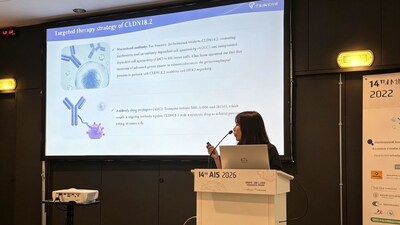
MONTPELLIER, France, July 8, 2026 /PRNewswire/ -- Tsingke, a provider of integrated life science research solutions, participated in the Antibody Industrial Symposium (AIS) 2026, one of Europe's leading conferences dedicated to therapeutic antibodies and biotherapeutics. At the event, the company presented its latest advances in AI-assisted therapeutic antibody discovery and showcased its comprehensive antibody development platform at Booth #44.
AI-Enabled Discovery of Highly Selective CLDN18.2 Antibodies
As part of the scientific program, Tsingke presented an AI-enabled workflow for discovering therapeutic antibodies targeting Claudin 18.2 (CLDN18.2), an emerging target for gastric cancer and other solid tumors.
The presentation demonstrated how AI-assisted sequence analysis and a proprietary screening strategy improve target specificity by reducing potential cross-reactivity with the closely related CLDN18.1 protein, a longstanding challenge in CLDN18.2 antibody development.
The resulting antibody candidates showed strong specificity and favorable developability, highlighting the potential of integrating AI with experimental validation to accelerate therapeutic antibody and antibody-drug conjugate (ADC) development.
End-to-End Antibody Development Capabilities
In addition to its scientific presentation, Tsingke showcased its integrated antibody development platform, covering multiple stages of biologics discovery and development, including:
- Antibody Discovery using hybridoma, single B-cell, and phage display technologies for the identification of high-affinity and highly specific antibodies.
- Antibody Engineering including antibody humanization, affinity maturation, and synthetic antibody library construction to accelerate therapeutic antibody optimization.
- Protein Expression supported by six expression systems and a rapid gene-to-protein workflow for applications including monoclonal antibodies, ADCs, AOCs, and in vitro diagnostics (IVD).
"AIS 2026 provided an excellent opportunity to share our latest work in AI-enabled antibody discovery and connect with researchers across the antibody community," said Chuanting Tan, Senior R&D Engineer at Tsingke. "As therapeutic antibody development becomes increasingly complex, integrating computational approaches with experimental validation can help researchers identify and optimize promising candidates more efficiently. We will continue to enhance our discovery and development capabilities to support innovation in biologics research."
Building on these efforts, Tsingke will continue expanding its AI-enabled discovery platform and integrated biologics capabilities to help researchers accelerate projects from early target discovery through protein expression and characterization.
About Tsingke
Tsingke Biotech is a leading innovator in synthetic biology, with a mission to build "the world's great gene factory." Combining proprietary reagents, consumables, and synthesis equipment with AI-driven molecular manufacturing technologies, Tsingke Biotech provides efficient and high-quality Tsynth® gene synthesis services. Its work supports industries ranging from biopharma to agriculture, food, and environmental sciences.
For news and updates, follow Tsingke Biotech on LinkedIn.
Contact: market@tsingke.com.cn
Photo - https://mma.prnewswire.com/media/3004723/image1.jpg
 View original content:https://www.prnewswire.co.uk/news-releases/tsingke-highlights-ai-driven-cldn18-2-antibody-discovery-at-ais-2026--302820235.html