LG ELECTRONICS' ULTRAVIEW WINDSHIELD DISPLAY NAMED FINALIST FOR 2026 PACE PILOT AWARD
LG's Innovative Windshield Display Architecture Is Designed to Support Eyes-on-the-Road Interaction While Simplifying Cockpit Design for OEMs
News Summary
- LG Electronics has been named a finalist for the 2026 Automotive News PACE Pilot Award for its UltraView Windshield Display.
- LG's UltraView Windshield Display ushers in a new category of in-vehicle display, delivering a large, situation-adaptive information experience and offering automakers greater flexibility in designing cockpit display configurations.
- Its innovative architecture combines a focus-free compact AR-HUD with LG's proprietary Hover Screen, presenting driving-critical information within the driver's line of sight while displaying navigation, multimedia, climate controls and vehicle functions on a large virtual screen at a focal distance of 1.2 meters.
- This recognition reinforces LG's leadership in SDV cockpit innovation and positions UltraView as a next-generation windshield display architecture designed to enable a more intuitive and smarter in-cabin experience.
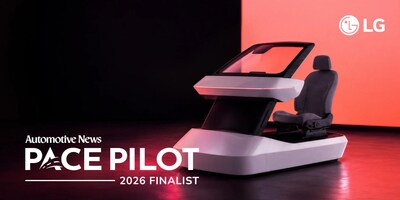
SEOUL, South Korea, July 28, 2026 /PRNewswire/ -- LG Electronics (LG) has been named a 2026 Automotive News PACE Pilot Award finalist for its UltraView Windshield Display, an innovative in-vehicle display solution designed to deliver driving information and infotainment content across a large area of the windshield. The PACE Pilot Award recognizes early-stage, non-commercialized automotive innovations that have demonstrated potential through pilot programs.
The Evolving Demands of Future Cockpits
As the automotive industry advances toward the software-defined vehicle (SDV) era, evolving safety standards – including the European New Car Assessment Programme's (Euro NCAP) 2026 protocols – are placing greater emphasis on eyes-on-the-road interaction. At the same time, vehicle cockpits are becoming increasingly display-centric, with essential driving information spread across multiple screens. This fragmented display environment can make eyes-on-the-road interaction more challenging and add complexity to cockpit design.
Delivering Situation-Adaptive Information Across the Windshield
Engineered to address these challenges, LG's UltraView Windshield Display represents a new category of windshield display architecture. It combines a compact focus-free augmented reality head-up display (AR-HUD) with LG's proprietary Hover Screen in a single optical system, delivering a situation-adaptive viewing experience across the windshield while giving OEMs greater flexibility to design a sleek, uncluttered cockpit. UltraView Windshield Display's hybrid optical architecture dynamically adjusts the size and type of information presented according to driving context.
The focus-free compact AR-HUD projects driving-critical information, including vehicle speed, advanced driver assistance system (ADAS) alerts, and navigation cues at a far virtual distance aligned with the road. LG's proprietary Hover Screen solution presents navigation, vehicle status, HVAC and multimedia content on a large virtual screen at a perceived distance of 1.2 meters. Displaying different types of information at discrete virtual distances, UltraView Windshield Display is designed to help reduce unnecessary eye movement and support eyes-on-the-road interaction.
LG's solution provides a combined field of view of 25 degrees by 7 degrees from a compact, vehicle-ready package of approximately 15 liters, helping strike a balance between display size, windshield coverage and vehicle integration. When inactive, the display leaves no visible black masking on the windshield, helping preserve visibility and a clean, seamless cabin interior.
Reinforcing LG's Leadership in SDV Cockpit Innovation
With automakers shifting from expanding display counts to optimizing cockpit architectures, windshield-based displays are poised to play an important role in future vehicles. According to Omdia, global HUD shipments are projected to more than double by the start of the next decade, growing from 10.21 million units in 2025 to 25.27 million units by 2032. Against this backdrop, LG continues to advance the UltraView Windshield Display through ongoing technology development and collaboration with industry partners.
"Being named a finalist for the Automotive News PACE Pilot Award is a meaningful recognition of LG's efforts to advance cockpit innovation for the SDV era," said Eun Seok-hyun, president of the LG Vehicle Solution Company. "As a next-generation automotive display architecture, UltraView Windshield Display redefines how information is delivered in the vehicle, helping automakers create a more intuitive and streamlined in-cabin experience."
About LG Electronics Vehicle Solution Company
The LG Vehicle Solution Company (VS) is bringing LG's unique mobility innovations to the automotive industry. As a trusted and innovative partner, the company provides intelligent solutions including head units, displays, connectivity, ADAS vision systems, and software solutions integrating human-centered AI and automotive engineering into the modern AI/software-defined vehicle. Committed to "Driving better future mobility," the company has diversified its portfolio to further strengthen its capabilities, including automotive lighting systems, e-powertrain and cybersecurity. For more information, visit www.LG.com/global/mobility. To stay updated with the latest news, subscribe to the LG mobility newsletter, LG Loop at www.LG.com/global/mobility/newsletter and follow the LG VS Company LinkedIn channel at www.linkedin.com/company/lgvehiclesolution.
Photo - https://mma.prnewswire.com/media/3007800/LG_VS_Press_Release_PACE_Pilot_Award_Finalist_01.jpg
 View original content:https://www.prnewswire.co.uk/news-releases/lg-electronics-ultraview-windshield-display-named-finalist-for-2026-pace-pilot-award-302834973.html