Angel Yeast's Initiative Advances Internationally Recognized Codex Standard for baker's yeast
YICHANG, China, July 21, 2026 /PRNewswire/ -- The 49th session of the Codex Alimentarius Commission (CAC49), held in Geneva, Switzerland, from July 6 to 10, 2026, adopted a number of international food standards, including the Codex Standard for Baker's Yeast, which was proposed by China.
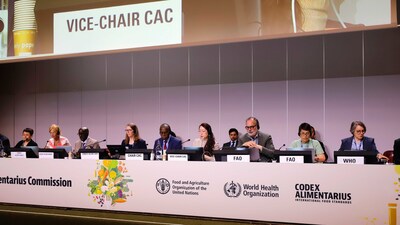
The new standard is the first internationally recognized Codex standard for baker's yeast products, filling a longstanding gap in international food standards for the category. It establishes a harmonized framework for the production, trade and regulatory oversight of baker's yeast products worldwide, helping promote fair, science-based and efficient international trade while facilitating global commerce and strengthening consumer protection.
The standard was jointly proposed in 2021 by Angel Yeast (SSE: 600298) and the China National Research Institute of Food and Fermentation Industries (CNRIFFI). Following multiple rounds of international consultation, the proposal was formally accepted as a new Codex work item in 2024. China served as Chair of the drafting process, working closely with Vice-Chairs France and Turkey to coordinate the development and negotiation of the standard.
As one of the proposal's initiators, Angel Yeast played an active role throughout the standard-setting process, contributing decades of technical expertise and quality management experience. Drawing on its extensive experience in standards development, CNRIFFI coordinated the drafting of the standard and consultations with Codex members throughout the process. During the session, delegates from member countries discussed food safety science and Codex priorities before reaching consensus on the standard.
Angel Yeast exports its products to more than 170 countries and regions. Since 2010, the company has established yeast manufacturing facilities in Egypt, Russia, Indonesia and other markets. Beyond supplying products and technology, Angel Yeast has worked internationally to promote standardized practices for the yeast industry, evolving from a product supplier into a contributor to global industry standards.
To ensure consistent quality across its global operations, Angel Yeast applies unified technical specifications developed at its headquarters to all manufacturing facilities worldwide, covering raw materials, production processes and finished products. These specifications are registered with local regulatory authorities where required. In markets without official yeast product standards, Angel Yeast's registered specifications have effectively become de facto local standards. In 2013, the company successfully registered China's National Standard for Yeast Extract (GB/T 23530-2009) with the Egyptian Organization for Standardization and Quality (EOS), where it received official recognition, introducing the standard into the African market.
"We are proud to have contributed to the development of this standard under the framework of the Codex Alimentarius Commission," said Deng Juanjuan, Head of Technology at Angel Yeast. "Its adoption will strengthen coordination and cooperation across the global baker's yeast industry. Building on this milestone, Angel Yeast will continue participating in the development of international standards in areas including health, nutrition and biomanufacturing, contributing its technical expertise to the continued progress of the global industry."
Photo - https://mma.prnewswire.com/media/3007039/The_49th_session_of_the_Codex_Alimentarius_Commission__CAC49___held_in_Geneva__Switzerland.jpg
Logo - https://mma.prnewswire.com/media/1586948/6028018/angel_logo_Logo.jpg
 View original content:https://www.prnewswire.co.uk/news-releases/angel-yeasts-initiative-advances-internationally-recognized-codex-standard-for-bakers-yeast-302830874.html